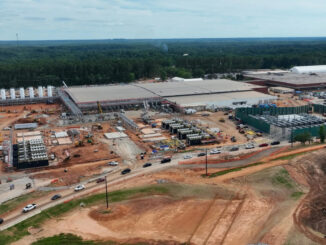
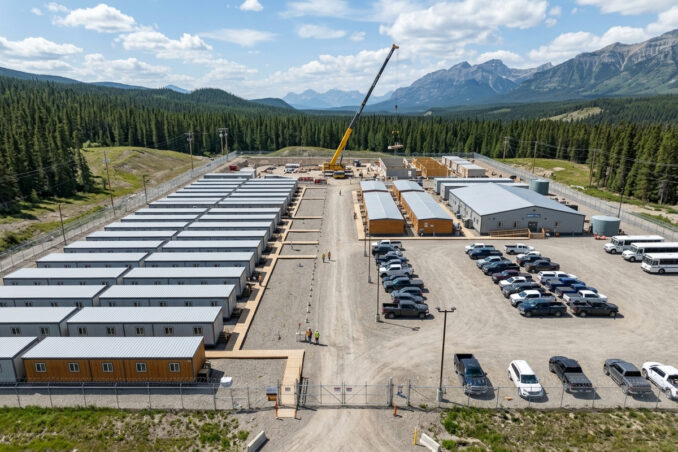
Fast Facts On “Closed-Loop” Workforce Camps (Man Camps) For Hyperscale Projects
-
85% Transient Labor: Up to 85% of the construction workforce for highly specialized hyperscale projects originates from out of state, drastically reducing local economic multipliers.
-
90% Wage Remittance: Transient workers electronically remit approximately 90% of their net base pay to their home states, bypassing the local community, including banks and retail shopping
-
Zero Lodging Tax Capture: Closed-loop workforce camps classified under IRS Section 119 are exempt from commercial hotel definitions, generating $0 in county Transient Occupancy Tax (TOT).
-
Industrialized Housing: The AI boom has triggered the deployment of massive temporary housing logistics, including 2,300-site RV parks and turnkey modular camps built exclusively for data center crews.
-
High Fiscal Burden: Host municipalities frequently absorb the immediate physical infrastructure costs (road degradation, EMS & fire strain) without the projected consumption tax revenue to offset them.
The Mechanics of Economic Leakage
When hyperscale AI data centers are proposed in rural communities, economic impact projections often highlight hundreds of millions of dollars in direct construction payroll. However, documented outcomes reveal a severe disconnect between gross payroll and locally retained economic benefit. This disparity is driven by “economic leakage”—the rate at which capital exits the host municipality.
In the development of a $2 billion hyperscale facility generating $400 million in direct labor payroll, the local-to-transient dynamic dictates the true economic impact. Because rural markets generally lack the deep labor pools required for specialized hyperscale electrical and mechanical installation, approximately 85% of the workforce must be imported. While the 15% local workforce ($60 million in this model) acts as a functional economic multiplier through local property taxes and retail spending, the transient 85% ($340 million) acts extractively. Benefiting from guaranteed 50-to-60-hour work weeks, these transient laborers leave their primary tax liabilities and mortgages in their home states. Consequently, the vast majority of their base pay is remitted out of the host county every payday.
Subsistence Evaporation and Closed-Loop Camps
In traditional industrial construction models, municipalities offset infrastructure wear-and-tear by capturing the transient workforce’s subsistence spending. Workers utilizing a $150–$180 daily per diem rent local motel rooms, eat at local restaurants, and purchase fuel, generating vital sales and lodging tax revenues.
The deployment of closed-loop workforce camps (colloquially known as “man camps”) eliminates this secondary economic capture. Because these self-contained facilities provide industrial cafeterias, laundry, and recreation, workers have virtually no need to interact with the local commercial sector. Furthermore, under IRS Section 119, employer-provided housing for the convenience of the employer is not classified as commercial lodging. Consequently, the host county is stripped of anticipated Transient Occupancy Tax (TOT).
Documented Realities in the U.S. Buildout
The economic leakage model is actively documented across the United States. As developers build multi-megawatt campuses, the sheer volume of imported labor has spawned a secondary industry: the industrialization of remote workforce housing.
-
The 2,300-Site Mega-Camp (Abilene, Texas): The influx of hyperscale data center construction in Abilene required an immediate housing solution for thousands of traveling tradesmen. The result was the Elmdale RV Park, a massive 2,300-site development purpose-built for transient long-term workers. Because RVs are classified as temporary housing, the host community absorbs the infrastructure strain of thousands of temporary residents while local commercial lodging and real estate sectors see virtually no economic injection.
-
Rural Louisiana (Rayville & Holley Ridge): Near the Meta data center in Rayville, Louisiana, facilities like the Boggy Bayou RV Park operate explicitly to serve the data center workforce just two miles from the site. The park also provides turnkey industrial housing for the Hyperion Data Center campus in nearby Holley Ridge. The subsistence spending of these workers is largely captured by the park operators, heavily restricting the broader sales tax revenue that local planning commissioners originally anticipated.
-
Turnkey Logistics Conglomerates: Multinational logistics firms are actively marketing closed-loop camps specifically for the AI infrastructure boom. Worldwide Employee Housing (WEH) notes that the AI infrastructure surge has created a remote workforce housing challenge “at a scale not seen since the shale oil era”. WEH deploys factory-direct, full-camp solutions for crews of 500 or more, explicitly marketing their ability to bypass local real estate and lodging markets.
Projections vs. Documented Outcomes
During project approval phases, the scale of temporary construction is frequently conflated with permanent local economic growth. Data from comparable U.S. infrastructure megaprojects demonstrates that while transient workforces immediately strain county resources—accelerating the degradation of local roads and requiring increased emergency readiness—the expected consumption tax revenue fails to materialize to cover these externalities.
Once the 18-to-24-month construction phase concludes, the hyperscale data center transitions into a highly automated facility. Permanent operational employment typically drops to much lower full-time equivalent (FTE) employees, halting further significant labor-driven economic injection.
Bottom Line
The combination of an 85% transient workforce and closed-loop logistics camps represents a maximum-leakage economic scenario for rural host municipalities. While hyperscale data centers generate massive gross payrolls during construction, the structural mechanisms of wage remittance and tax-exempt industrialized housing ensure that the vast majority of that capital bypasses local commercial sectors. Ultimately, host communities shoulder the physical infrastructure burden without realizing the promised financial velocity.
Sources and References
-
Good Jobs First (Tarczynski, K., & Mattera, P.). Money Lost to the Cloud: How Data Centers Benefit from State and Local Subsidies. Published: 2016. URL: https://goodjobsfirst.org/money-lost-to-the-cloud/
-
Headwaters Economics (Haggerty, J., et al.). The Economic Impacts of Transient Workforces in Rural Western Communities. Published: 2014. URL: https://headwaterseconomics.org/energy/western/transient-workforce-impacts/
-
Internal Revenue Service (IRS). IRC Section 119: Meals or Lodging Furnished for the Convenience of the Employer. URL: https://www.irs.gov/publications/p15b
-
Elmdale RV Park. Abilene, TX Corporate Site. URL: https://elmdalervpark.com/
-
Campspot / Reneau Properties. Boggy Bayou RV Park – Rayville & Holley Ridge, LA. URL: https://www.campspot.com/park/boggy-bayou-rv-park-rayville-la, https://www.reneauproperties.com/industrial-housing
-
Worldwide Employee Housing (WEH). Data Center Workforce Housing Solutions. URL: https://www.employeehousing.com/data-center-workforce-housing
Wyoming Data Center Facts | Photo: RIM Camping